



New European Union (EU) caps on imports of China-made hybrid vehicles are set to drive the country’s automakers to ship more cars that are exempt from the quotas due to their use of a niche powertrain, as they rethink their strategy for cracking the market.
An annual import limit of 350,000 hybrid units agreed by Brussels and Beijing in October will not include so-called range-extended electric vehicles (EREVs), which use a small engine that acts as a generator to charge an onboard battery, according to several executives familiar with the matter. The quota will take effect as early as December 1, pending approval from EU member states.
The policy change could position cars containing such powertrains as a practical alternative to plug-in hybrid vehicles, appealing to consumers who are concerned about driving range and are reluctant to make a drastic switch to electric vehicles, industry insiders said.
“They’re such an easy sell to this fear-mongered audience that still exists,” said Felix Hamer, an Amsterdam-based blogger who maps EV charging facilities across Europe, referring to anxiety over range and charging. “They can all take this fear away so that you don’t have to learn [anything] new.”
In China’s domestic market, EREVs are typically large, upmarket cars tailored to families. They have also gained relatively broad acceptance, accounting for 8.6% of China’s total EV and hybrid car sales in October.
Hit by European Commission tariffs of up to 35% in 2024 and often regarded as merely a stepping stone toward the bloc’s fully electric vision, EREVs have long been sidelined by Chinese automakers in their global expansion plans and have maintained a minimal presence in Europe. They account for less than 0.5% of Europe’s EV market, according to Benchmark Mineral Intelligence.
Despite the burden of tariffs, EREVs sold in Europe can still be “highly profitable,” analysts said.
“Once brand equity is slowly established, prices will increasingly become stable,” said Matthias Schmidt, founder of Schmidt Automotive Research.
The tide could soon change, as a growing number of Chinese companies look to offer more EREVs to European consumers.
Xpeng, whose lineup includes eight EREV models, is “closely monitoring the evolving EU regulatory landscape” and aims to “offer customers more powertrain choices,” it said in a statement to Nikkei Asia.
The company launched its first EREV in Europe earlier this year, offering a combined driving range of 1,000 kilometers on a full battery charge and a full tank of gasoline. The L03 coupe starts at EUR 41,095 (USD 45,100) and the group claims it emits as little as 11 grams of carbon dioxide per kilometer.
That compares with a starting price of EUR 52,215 (USD 57,200) and emissions of 34 grams per km for the plug-in hybrid version of the Volkswagen Tiguan sport utility vehicle sold in Germany.
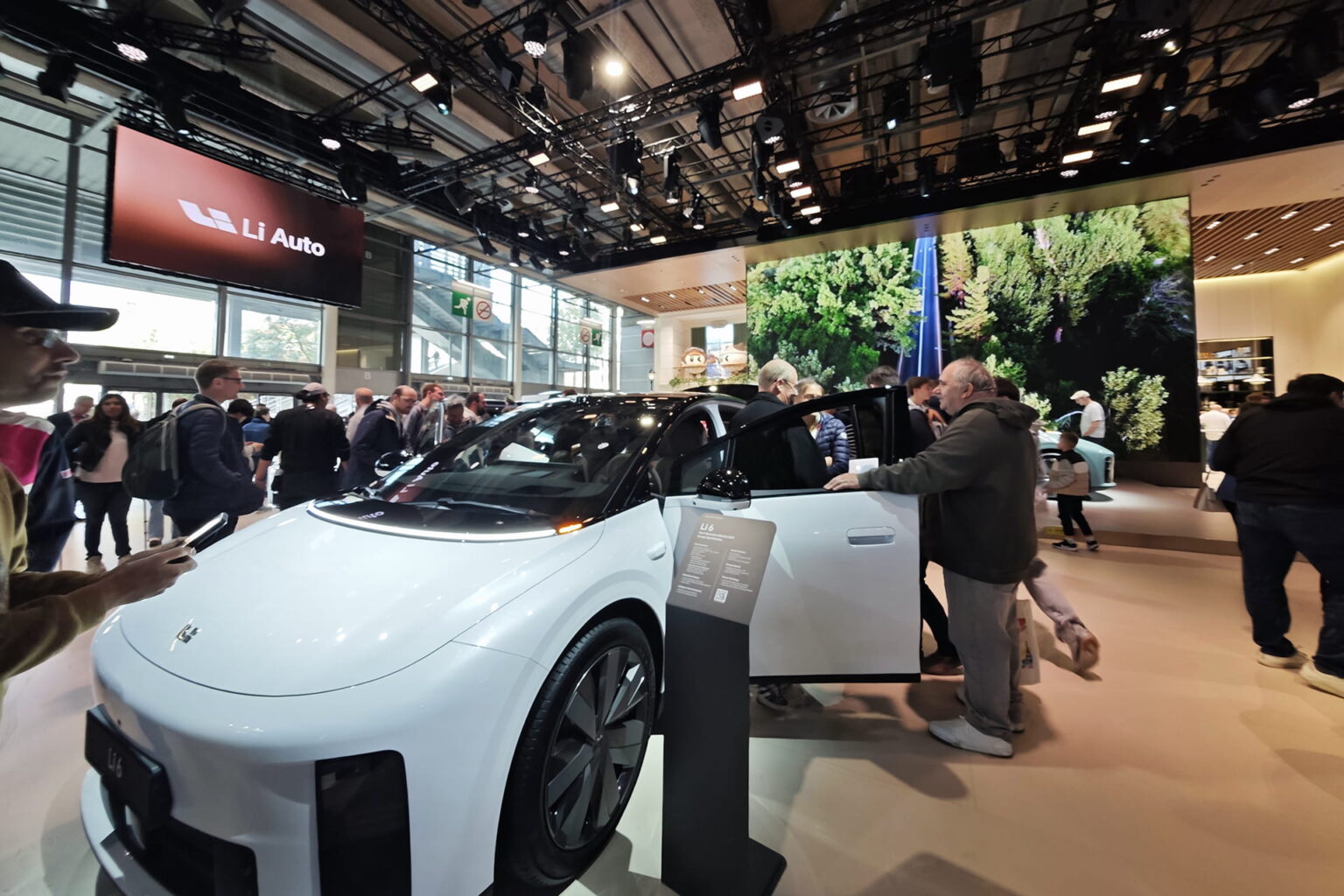
Li Auto, which scored early success in China as a pioneer of EREVs and commanded roughly a quarter of the domestic market last year, announced a plan to introduce both pure EVs and EREVs in Europe at last month’s Paris Motor Show.
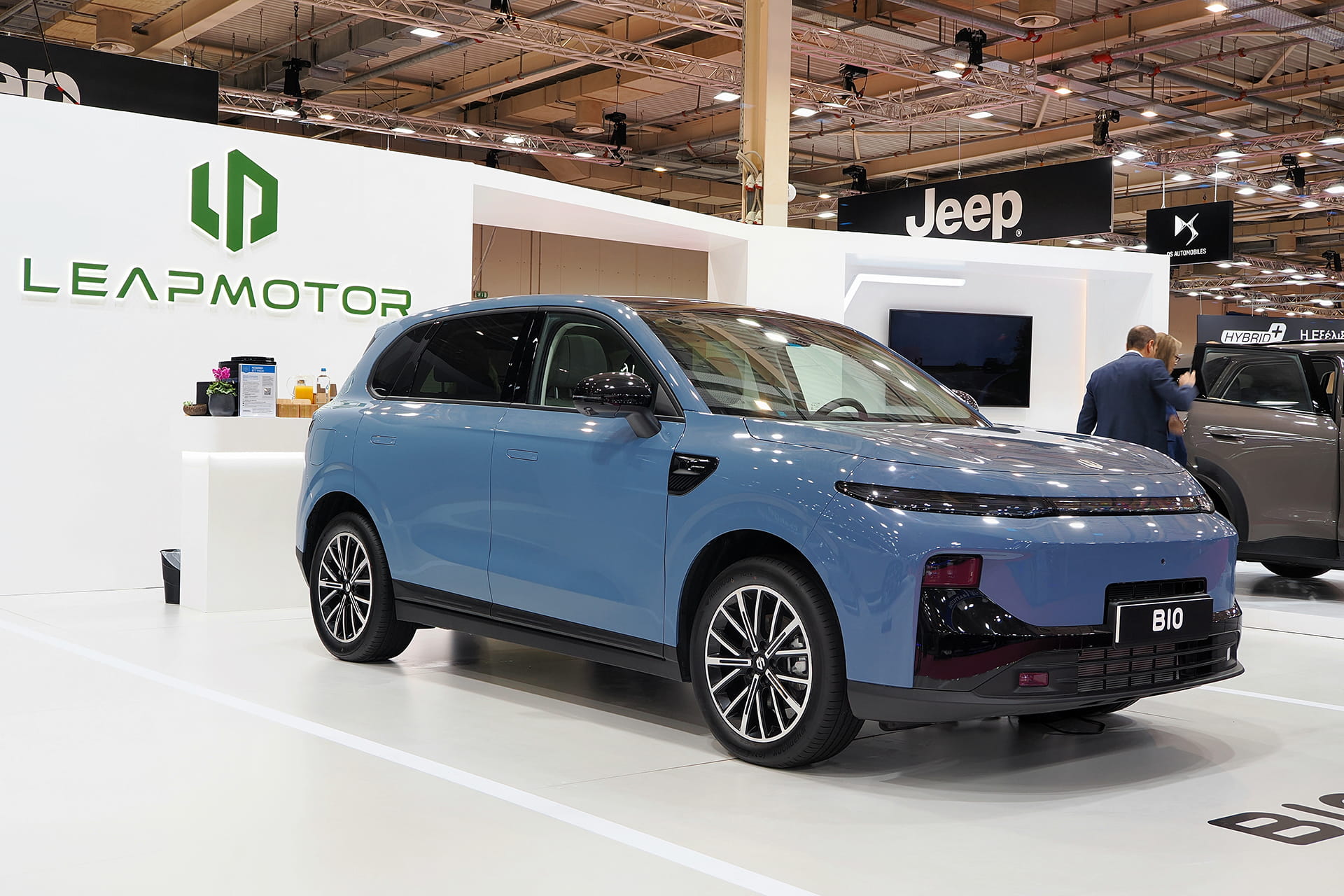
Leapmotor, a carmaker backed by Jeep owner Stellantis, became the first Chinese player to sell EREVs in Europe last year, with the launch of its C10 SUV. It rolled out its second EREV, the B10 SUV, in Europe earlier this year and displayed the D19, built on its latest EREV platform, at the Paris exhibition.

Huawei-backed Aito is evaluating “market needs” and “trying to bring as many models as possible” to European consumers in the fall of 2027, said Clifford Kang, vice president of Seres, which owns the brand. Aito displayed four SUVs at the Paris expo, all of which are available in China with both range-extended and battery-electric powertrains.
In October, EREVs accounted for 4.6% of China’s total exports of “new energy” vehicles, which also include pure EVs and plug-in hybrid cars, up from 2.7% a year earlier, according to the China Passenger Car Association (CPCA).
However, analysts warned that changing the product mix would offer only a short-term fix. The EU’s policy is intended to encourage manufacturing localization and strengthen European supply chains.
“It’s merely a patch on a wide-open wound,” said Frederik Gollob, founder of automotive consultancy Qi Advisory, referring to Chinese carmakers’ efforts to reshuffle their model lineups. “It’s either you have a volume limitation or you pay a higher tariff.”
“The final solution will be … to increase the local manufacturing footprint,” he added.
The EU-China deal is poised to halve projected exports of China-made hybrid cars over the next four years, reducing the number by “several million” units, according to EU trade commissioner Maros Sefcovic. China exported a total of 838,500 plug-in hybrid vehicles and hybrid EVs to the EU in the first nine months of the year, data from the CPCA showed.
China’s Ministry of Industry and Information Technology, the country’s top automotive regulator, is holding talks with carmakers on how to divide the annual export quota of 350,000 hybrid vehicles between them, an executive familiar with the discussions said.
The executive added that his company expects to receive an annual allocation of 20,000–30,000 units for exports to the 27-country bloc starting in 2027, which he described as “too small to matter.”
“It is negligible and we’ll simply focus on expanding our production capacity in Europe instead,” he said.
In the third quarter, Chinese brands roughly doubled their share of new-car registrations across Europe to 12.7%, according to Dataforce, partly because they frontloaded shipments of hybrid cars to the region ahead of the restrictions.
Gollob of Qi Advisory said there is currently “chaos” and “insecurity” in the market as stakeholders await the outcome of the discussions.
“[The quota regime] might give a short-term dent to the growth of Chinese carmakers’ market share in Europe, but it’s not something that will stop it,” he added. “We’re not at the end of the expansion.”
This article first appeared on Nikkei Asia. It has been republished here as part of 36Kr’s ongoing partnership with Nikkei.
Note: EUR figures are converted to USD at rates of EUR 0.91 = USD 1 based on estimates as of November 26, 2026, unless otherwise stated. USD conversions are presented for ease of reference and may not fully match prevailing exchange rates.